
Searching for our Ancestors
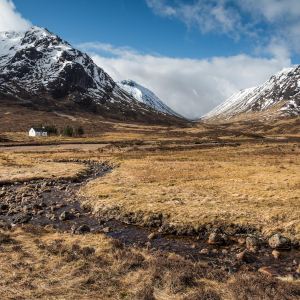
Glencoe is a village in western Scotland. It lies in steep-sided Glencoe valley, in the Scottish Highlands. The area is known for waterfalls and trails that climb peaks such as Buachaille Etive Mor and Bidean nam Bian.
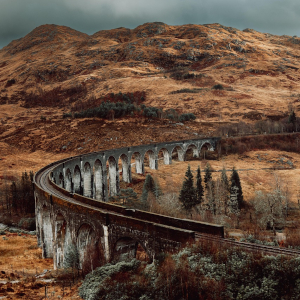
The Glenfinnan Viaduct is a railway viaduct on the West Highland Line at Glenfinnan, in the Lochaber district of Scotland, built from 1897 to 1901. Located in the West Scottish Highlands, it sits at the top of Loch Shiel.
With at least 40 million people across the globe able to lay claim to Scottish ancestry, the scope and potential of research is huge. When you factor in that this large Scottish diaspora has a worldwide fascination with Scotland, boosted by books, TV and film, there has never been a been a better time to get involved with your Scottish heritage.
Scottish genealogy research is centered on the official Scotland's People website, which holds over 100 million records, including statutory registers of births, deaths, and marriages (from 1855), census records (1841 to 1921), and Old Parish Registers (pre-1855). Key resources also include the National Records of Scotland, local archives like the Glasgow & West of Scotland Family History Society, and the Scottish Genealogy Society.
As stated, the Scotland's People website, holds over 100 million records and is a fantastic resource. It's where I do my main research as most of my ancestors come from Scotland. This direct access to statutory and church records,
is one of the best in the world (even if I do say so myself). Many countries do not have this kind of access, on payment or otherwise, but as genealogy grows all over the world more and more countries are seeing the benefit of providng easy access to this kind of information. You can check the indexes free on the site but as soon as you want to see a record
it on average costs 6 credits. You can buy 30 credits for £7.50, 40 for £10, 80 for £20 and 160 for £40. The credit costs for each type of record are:
holds over 100 million records and is a fantastic resource. It's where I do my main research as most of my ancestors come from Scotland. This direct access to statutory and church records,
is one of the best in the world (even if I do say so myself). Many countries do not have this kind of access, on payment or otherwise, but as genealogy grows all over the world more and more countries are seeing the benefit of providng easy access to this kind of information. You can check the indexes free on the site but as soon as you want to see a record
it on average costs 6 credits. You can buy 30 credits for £7.50, 40 for £10, 80 for £20 and 160 for £40. The credit costs for each type of record are:
2 credit - (50p) records: crofters and cottars (Napier Commission) returns, valuation rolls, servant tax rolls, downloads of free-to-view Virtual Volumes records.
6 credit (£1.50) records: statutory registers (births, older than 100 years, marriages, older than 75 years, deaths, older than 50 years),census returns, church register entries, prison register entries, lightkeepers' register entries, Scottish Women's Land Army entries.
10 credit (£2.50) records: wills and testaments, soldiers' and airmen's wills.
This can become quite expensive unfortunately especially when you are researching a common name, or a name with differing spellings and having to click on many records to eliminate them from your search.
Fortunately there is a way to be able to search and eliminate for quite alot less than these prices. Unfortunately (or really fortunately as far as I'm concerned) you have to live in Scotland. You can attend at Scotland's People and search those records for £15 for about a 5½ hour session. You can click on as many records as you like during that session. You can also view records that are within the statutory "wait time limt", records right up to the present time (although it does take several months to appear for administrative and technical reasons). You can print any records that are within the statutory "wait time" (births, older than 100 years, marriages, older than 75 years, deaths, older than 50 years) but you cannot print the records within these times. You can copy the information but not print, and stricly no photographing. Scotland's People is based at The National Records of Scotland in Edinburgh but they also have satellite Scotland's People Centres run by various Local Authorities. These are based at Mitchell Library - Glasgow, Burns Monument Centre - Kilmarnock, Live Borders, Council Headquarters - Newtown St Boswells.
The National Records of Scotland is the top governmental organisation 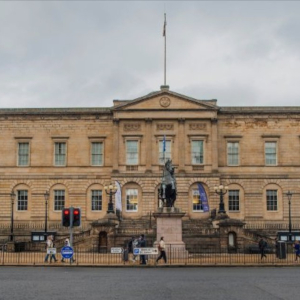 with regards record keeping for the Scottish nation. Their mission is to
collect, preserve and publish information about Scotland's people and history, to inform current and future generations. Their work underpins the fabric of Scottish society, telling the story of our nation. They perform: the registration and statistical functions of the Registrar General for Scotland,
the archival functions of the Keeper of the Records of Scotland, including maintaining the archives as one of Scotland's five National Collections. They hold records spanning the 12th to the 21st centuries, touching on virtually every aspect of Scottish life. They're the repository for the public and
legal records of Scotland. They also have many local and private archives. They hold and make available one of the most varied collections of records in Britain. They provide a leadership role for archive and record professionals. They also require 250 named public authorities to submit records
management plans. Their catalogue is extensive and you can book a research room to read any of the open records on file.
with regards record keeping for the Scottish nation. Their mission is to
collect, preserve and publish information about Scotland's people and history, to inform current and future generations. Their work underpins the fabric of Scottish society, telling the story of our nation. They perform: the registration and statistical functions of the Registrar General for Scotland,
the archival functions of the Keeper of the Records of Scotland, including maintaining the archives as one of Scotland's five National Collections. They hold records spanning the 12th to the 21st centuries, touching on virtually every aspect of Scottish life. They're the repository for the public and
legal records of Scotland. They also have many local and private archives. They hold and make available one of the most varied collections of records in Britain. They provide a leadership role for archive and record professionals. They also require 250 named public authorities to submit records
management plans. Their catalogue is extensive and you can book a research room to read any of the open records on file.
The National Records of Scotland also holds The Scottish Register of Tartans. Their main function is the registration of new tartan designs and the policy surrounding that function. Anyone, from anywhere in the world, can register a new tartan (individuals, schools and corporate groups as well as professional designers and weavers) providing that it meets our criteria for registration. The Scottish Register of Tartans was established by an act of the Scottish Parliament in November 2008, following a Member's Bill submitted by Jamie McGrigor MSP in February 2007. Members of the Scottish Parliament voted to establish a single, independent Scottish register of tartans which promotes and preserves information about historic and contemporary tartans from Scotland and throughout the world. The Register was launched on 5 February 2009 and the first tartan to be registered on that day was the Scottish Register of Tartans' Tartan (STR #10000). The Register is administered by the National Records of Scotland (NRS) with advice from the Court of the Lord Lyon and representatives of the Scottish tartan industry. The Keeper of the Records of Scotland and Registrar General for Scotland is also the Keeper of the Scottish Register of Tartans. Prior to the establishment of the Register, tartans were recorded by the Scottish Tartans Society, the Scottish Tartans World Register and the Scottish Tartans Authority.
Scottish Genealogy Society was founded in 1953 and established as a SCIO (Scottish Charitable Incorporated Organisation) in 2024, the Society is managed
by volunteers dedicated to offering support throughout the research process. They extend a warm welcome to members and visitors alike without the need for prior booking. The Family History Centre is located at 15 Victoria Terrace in Edinburgh, and is a valuable resource for anyone interested in
researching Scottish family and local history. Visitors and members have access to subscription sites like Ancestry, Findmypast, and The British Newspaper Archive when visiting the library. Moreover, they are now an Affiliate Library for Family Search, which members can also access on-site.
They offer classes to members at a discounted rate, and throughout the year, we host a series of talks. Additionally, in May, they organize an excursion to a site of genealogical significance. The talks are accessible both in person and via Zoom.
was founded in 1953 and established as a SCIO (Scottish Charitable Incorporated Organisation) in 2024, the Society is managed
by volunteers dedicated to offering support throughout the research process. They extend a warm welcome to members and visitors alike without the need for prior booking. The Family History Centre is located at 15 Victoria Terrace in Edinburgh, and is a valuable resource for anyone interested in
researching Scottish family and local history. Visitors and members have access to subscription sites like Ancestry, Findmypast, and The British Newspaper Archive when visiting the library. Moreover, they are now an Affiliate Library for Family Search, which members can also access on-site.
They offer classes to members at a discounted rate, and throughout the year, we host a series of talks. Additionally, in May, they organize an excursion to a site of genealogical significance. The talks are accessible both in person and via Zoom.
The Kingdom of Scotland is traditionally said to have been founded in 843 AD, when Kenneth MacAlpin (Cinaed mac Ailpin) united the Scots and the Picts to form the Kingdom of Alba. This union of the Pictish and Gaelic kingdoms in the 9th century laid the foundation for the Scottish state. Scotland is full of different cultures, traditions and languages. It is ripe for tracing your families past and I urge you to do so. One word of warning!! There are many trees on the internet that claim to they have traced their lineage back to some famous Scottish king or queen. Robert The Bruce seems to be a particular favourite of these claims. I would say that probably 99% of these clams are not quite true for quite a few reasons, mainly because records were never standardised until 1855, but also these king and queens had many children born out of wedlock and it is totally impossible to prove those links. I have seen quite a few of these types of trees just taking the first person with the name they are looking for and using that. With Scottish naming traditions there would be many people with the same or similar names in that area. Most people at that time could barely read or write so many of the names were only recorded as such because the person recoding them thought it was that way. To be honest I think the furthest back I have got is mid 18th century and I am doing well. Instead of searching for kings and queens, be happy that you have found and confirmed the birth or death of one of your ancestors and they were a simple domestic servant or shepherd.
Please don't hesitate to contact me using the contact form below in the footer if I can help you in any way with your research in Scotland. It would be my pleasure to help.
Tabhair aire duit fein agus bi go maith
(Take care and be well)
I make every effort to document my research. If you have something you would like to add or discuss, please do not hesitate to contact me.

